
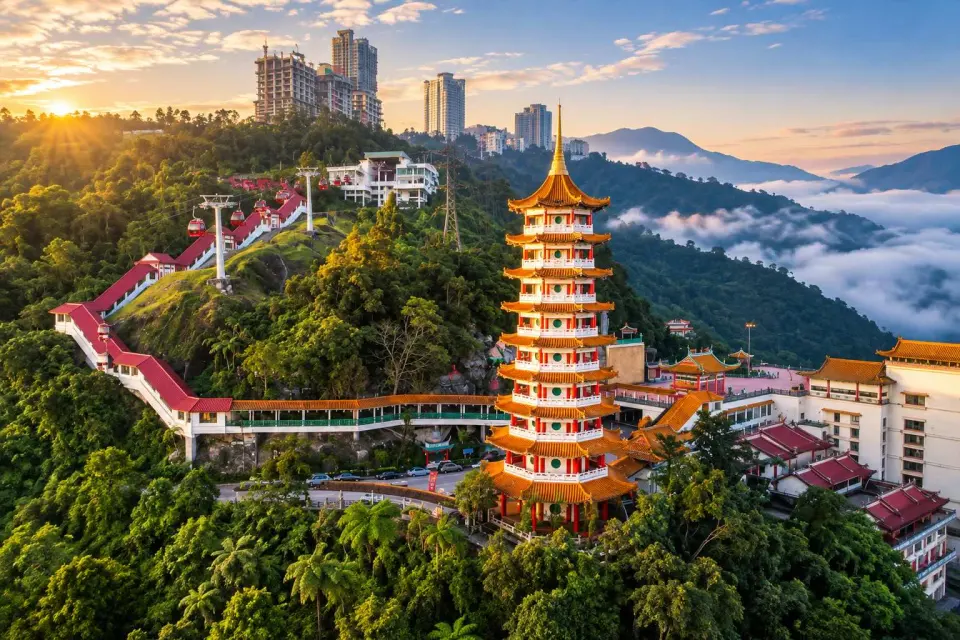
High above the forested slopes of Genting Highlands, Chin Swee Caves Temple is one of the mountain’s most distinctive cultural landmarks. It combines Chinese religious traditions, mountain scenery and the personal story of Genting founder Tan Sri Lim Goh Tong.
Located around 4,600 feet above sea level, the temple sits on a 28-acre rocky and forested site overlooking the surrounding mountains and the winding road towards Resorts World Genting.
Founder: Tan Sri Lim Goh Tong
Temple project initiated: 1975
Construction period: approximately 18 years
Official opening: 29 March 1994
Location: Genting Highlands, about 4,600 feet above sea level
Why Was Chin Swee Caves Temple Built?
Tan Sri Lim Goh Tong was born in Penglai, Fujian, China, where his family and community paid respects to Reverend Chin Swee. During the development of Genting Highlands, Lim discovered a rocky and forested slope that reminded him of Chin Swee Crag in his ancestral village.
After completing the first hotel and casino at Genting Highlands Resort, Lim decided in 1975 to build a temple dedicated to Reverend Chin Swee. He gathered friends and members of the Anxi clan to form the Chin Swee Temple Society and personally contributed land for the project.
Who Was Reverend Chin Swee?
Reverend Chin Swee was a religious figure associated with Fujian, China. According to the temple’s official history, he became respected for his charitable deeds and spiritual reputation, including traditions that credit him with the ability to summon rain and ward off evil spirits.
Inside Chin Swee Caves Temple stands a statue of Reverend Chin Swee, whose legacy remains central to the identity of the temple.
The 18-Year Construction Journey
Building the temple was far from easy. The site sits on a steep and rocky mountain slope, and conventional heavy machinery could not be used for some of the most difficult foundation work.
The temple’s official history states that manual labour was required and that construction took approximately 18 years to complete. Lim Goh Tong played several roles during the project, including planner, designer, contractor and supervisor.
A direct link to Genting’s founder: Chin Swee Caves Temple was deeply connected to Lim Goh Tong’s personal heritage, beliefs and the story of the mountain’s development.
Official Opening in 1994
Chin Swee Caves Temple officially opened on 29 March 1994. Genting’s corporate milestone history also records the opening of the temple in 1994.
What to See at Chin Swee Caves Temple
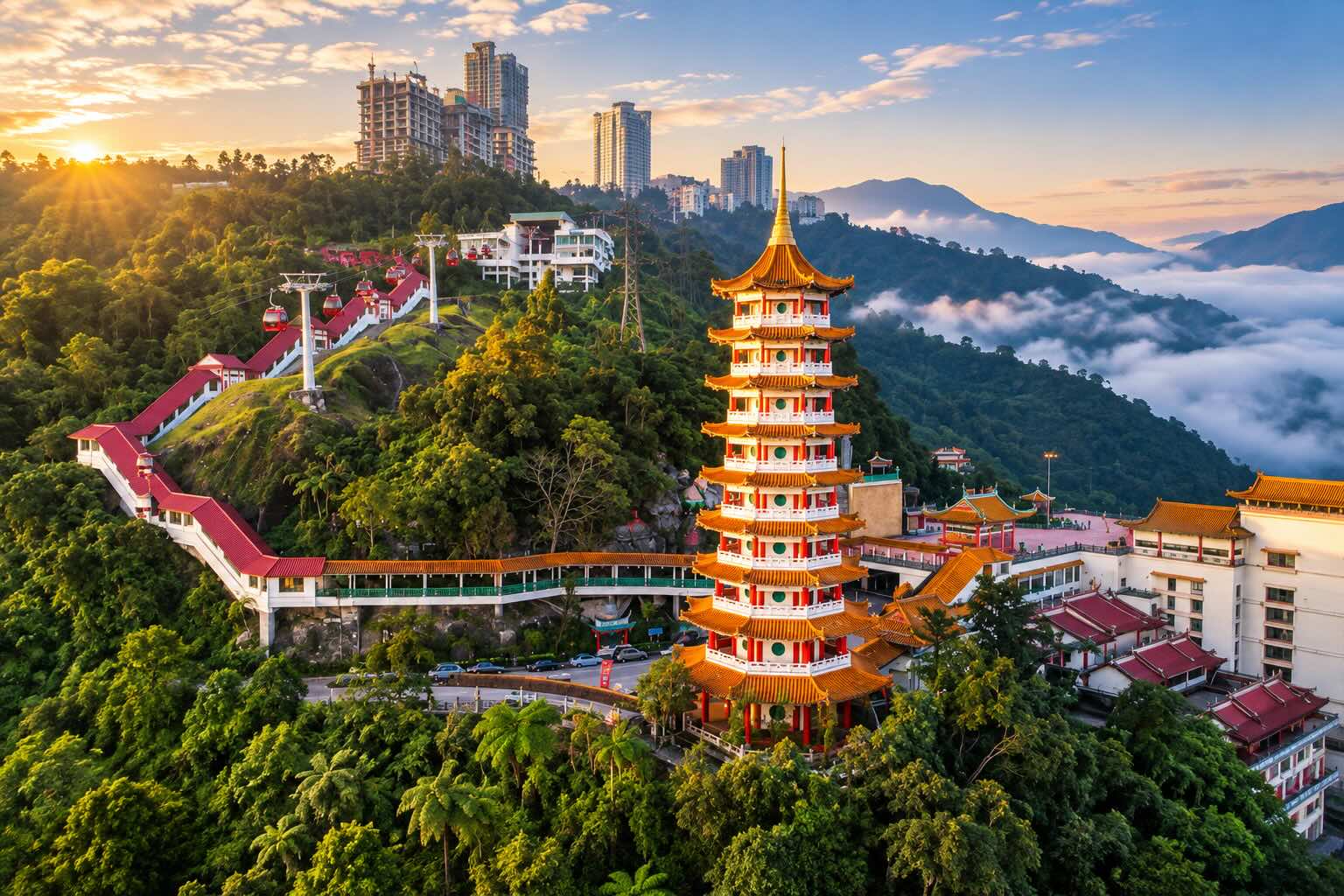
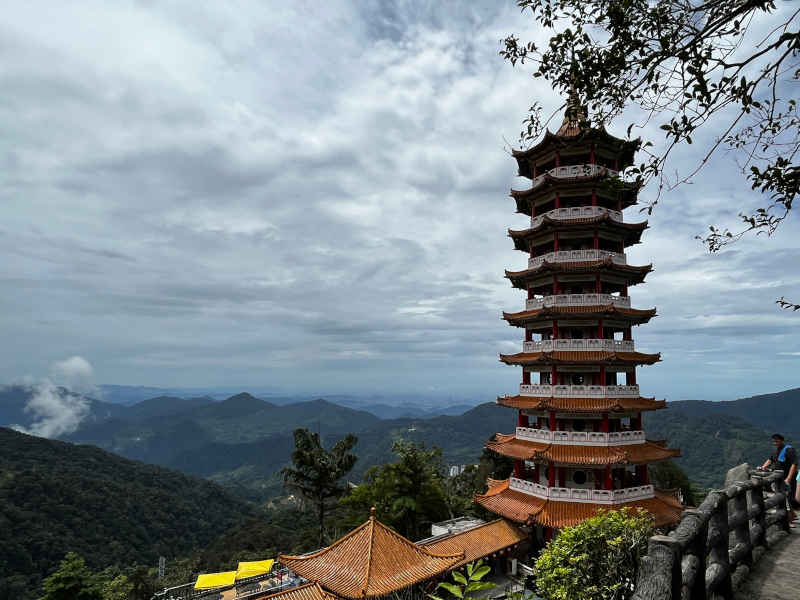
Nine-Storey Pagoda
The temple’s distinctive pagoda contains thousands of blessing lamps dedicated by devotees.
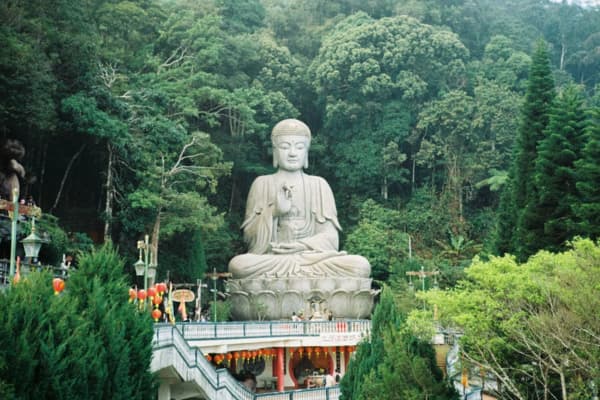
Giant Buddha Statue
A large Buddha statue stands prominently within the temple grounds and is one of the most recognisable sights at the site.
Statue of Guan Yin
Visitors can also see the large Guan Yin statue and nearby religious features.
Journey to Enlightenment
The temple includes visual representations inspired by traditional Chinese beliefs about the afterlife, morality and spiritual reflection.
Sky Terrace
The open-air terrace provides a scenic place to walk, reflect and enjoy the mountain atmosphere.
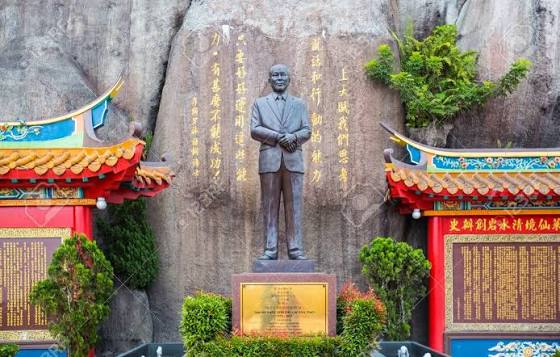
The Statue of Tan Sri Lim Goh Tong
A statue of Tan Sri Lim Goh Tong stands within the temple grounds in recognition of his role in the development of both Genting Highlands and Chin Swee Caves Temple.
New Additions in 2026
In February 2026, Chin Swee Caves Temple unveiled several new cultural and spiritual additions, including the Chin Swee Caves Temple Galleria, a Glazed Glass Lotus installation and Kimhua Hall.
The galleria presents the history of Reverend Chin Swee and the development of the temple through artefacts, archival material and interpretive displays.
How to Get to Chin Swee Caves Temple
The temple can be reached by road or via the Awana SkyWay. Visitors travelling by cable car can alight at Chin Swee Station and use the covered escalator linkway to reach the temple grounds.
The covered escalator linkway has been operating since 28 February 2017.
Visitors using the cable car should keep their ticket after stopping at Chin Swee Station so they can continue towards the resort peak or return to Awana Station.
Why Visit Chin Swee Caves Temple?
Learn another side of the Genting Highlands story beyond hotels and entertainment.
Explore Chinese religious traditions, sculpture, architecture and symbolic displays.
Enjoy elevated views of the surrounding forest, roads and Titiwangsa mountain landscape.
Tour Guide Storytelling: A Short Version for Visitors
A simple story you can share:
“Chin Swee Caves Temple is closely connected to the founder of Genting Highlands, Tan Sri Lim Goh Tong. While developing the mountain, he found a rocky slope that reminded him of his hometown in Fujian, China. In 1975, he began a temple project dedicated to Reverend Chin Swee. Because the terrain was extremely difficult, construction took around 18 years. The temple finally opened in 1994 and today remains one of the most peaceful and culturally important places in Genting Highlands.”
Chin Swee Caves Temple Gallery
History of Genting Highlands & Tan Sri Lim Goh Tong
Frequently Asked Questions
Who built Chin Swee Caves Temple?
The temple was founded through the vision and leadership of Tan Sri Lim Goh Tong, founder of the Genting Group.
When did construction of Chin Swee Caves Temple begin?
Tan Sri Lim Goh Tong decided to begin the temple project in 1975.
When did Chin Swee Caves Temple open?
The temple officially opened on 29 March 1994.
How long did the temple take to build?
The temple’s official history states that construction took approximately 18 years.
Can I reach Chin Swee Caves Temple by cable car?
Yes. Visitors can alight at Chin Swee Station on the Awana SkyWay and continue to the temple grounds using the escalator linkway.
Planning a Visit to Genting Highlands?
Plan your private journey between Kuala Lumpur and Genting Highlands with a vehicle suited to your group and luggage.
Get an Online QuoteVALETRA shared and private transport for airport transfers, chauffeur service, city tours, corporate travel, family trips, group journeys and Malaysia–Singapore transfers.
Need help? Message us via LIVE Chat, email: [email protected], or call: +60 11-1116 6800.