
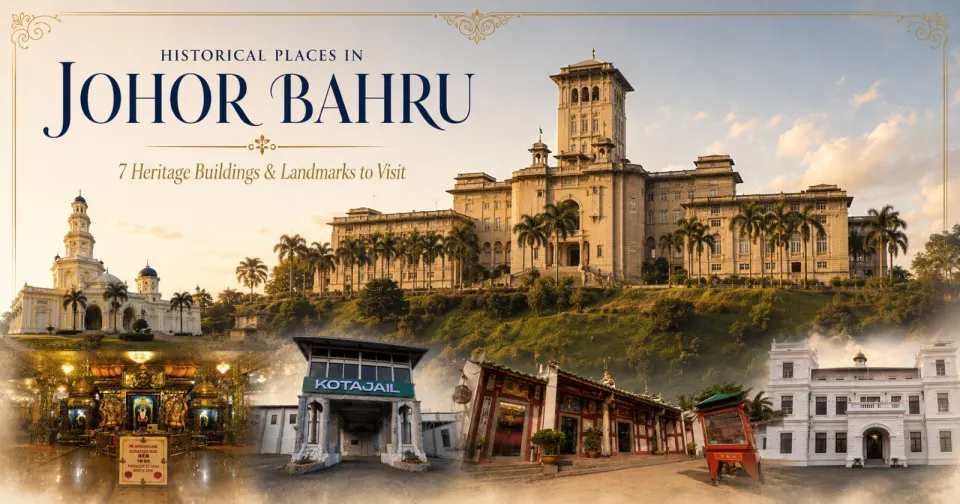
Johor Bahru is often known for shopping, family attractions and its connection to Singapore, but the city also has a rich architectural and cultural story. Historic government buildings, places of worship, museums and old city streets reveal how Johor Bahru developed into the southern gateway of Malaysia.
This heritage guide introduces seven historical places in Johor Bahru, with practical ideas for photography, suggested visit duration, access etiquette and a simple half-day route for travellers who want to explore the city beyond its modern malls.
What are the best historical places to visit in Johor Bahru?
Start with the Sultan Ibrahim Building, Sultan Abu Bakar State Mosque and Johor Bahru Old Chinese Temple. Continue to the Dato’ Jaafar Building, Kota Jail, the Glass Temple and Jalan Tan Hiok Nee heritage area for a broader view of Johor Bahru’s government, religious and community history.
Why Explore Johor Bahru’s Heritage?
These landmarks show different chapters of the city’s development: royal administration, multicultural communities, places of worship, colonial-era architecture and the reuse of older buildings for museums, culture and tourism.
See Johor Malay, Islamic, colonial, religious and traditional shop-house influences across one city.
Explore Malay, Chinese and Indian heritage through places of worship, museums and city streets.
Several landmarks are close to the city centre and can be combined into a half-day heritage route.
7 Historical Buildings and Heritage Landmarks in Johor Bahru
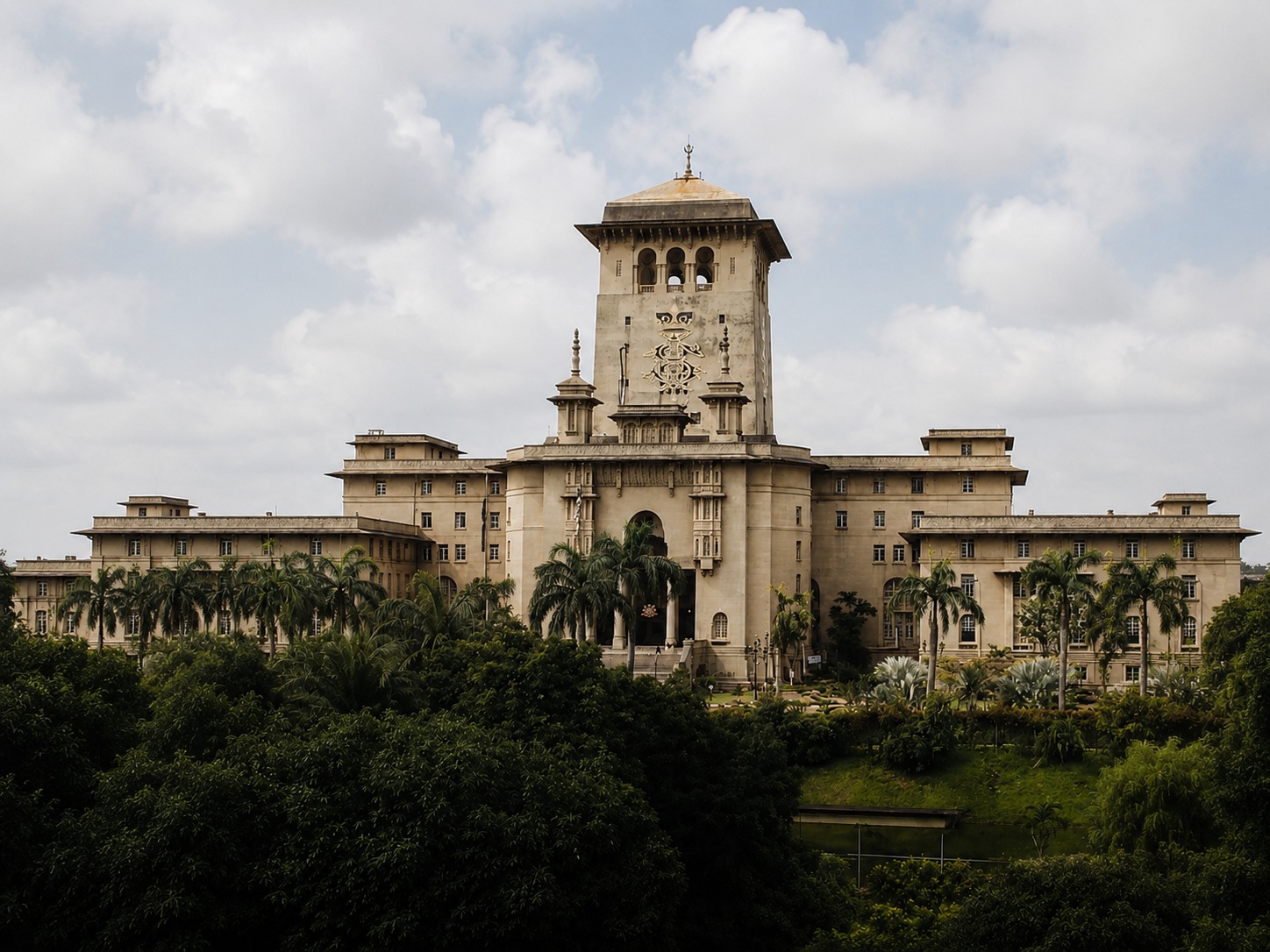
Sultan Ibrahim Building
Completed in 1940, this landmark combines Johor Malay, Islamic and colonial architectural influences. It once stood as the tallest building in Malaya before independence and later played a military role during the Japanese occupation.
The commanding tower, monumental façade, decorative details and the elevated setting around Bukit Timbalan.
Use a safe public viewpoint that captures the full façade and tower from below.
Suggested visit and access note
Suggested time: 15–25 minutes for an exterior stop.
Visitor note: Treat it as an exterior architectural stop unless public entry has been confirmed in advance.
Sultan Ibrahim Building
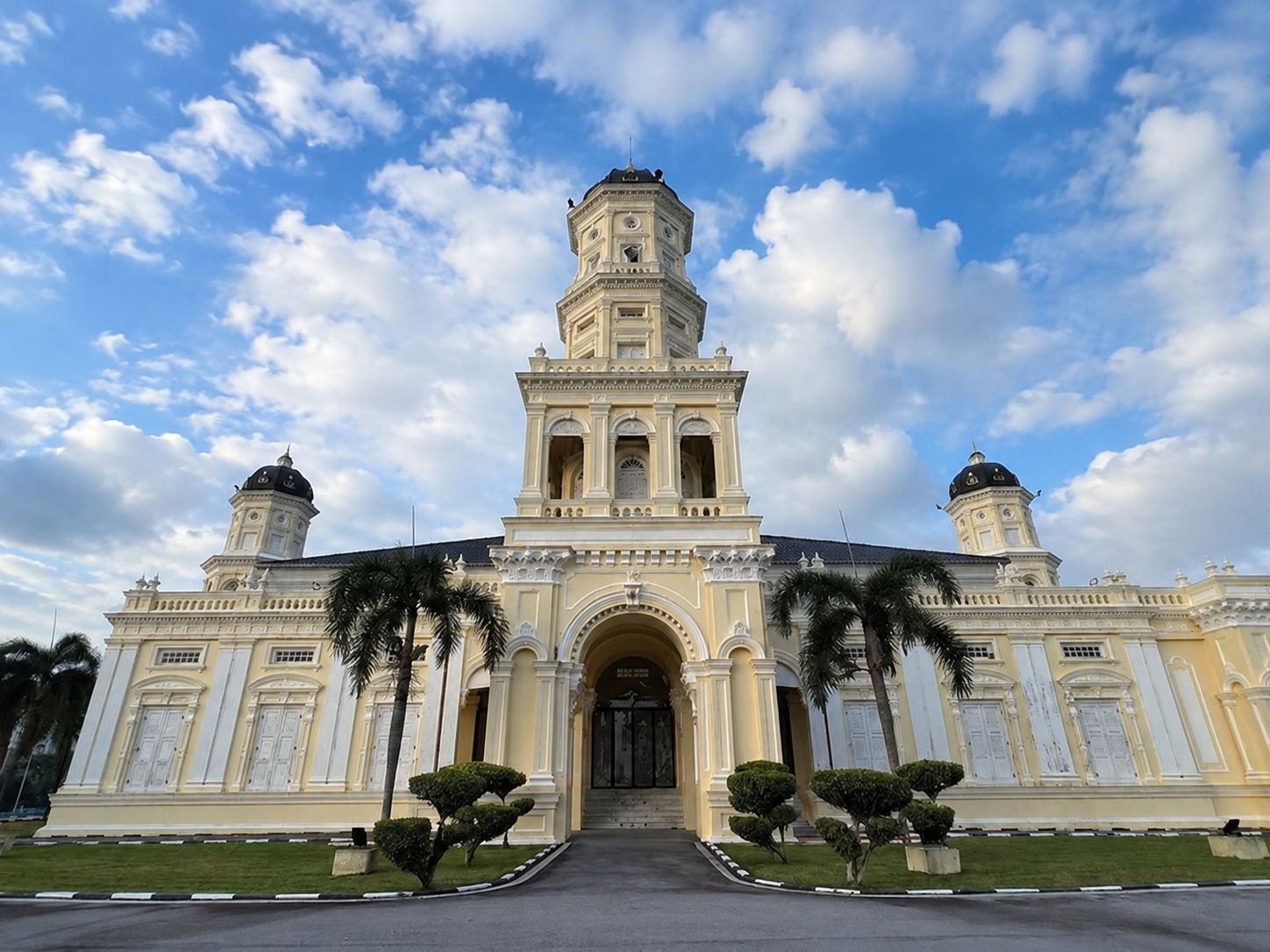
Sultan Abu Bakar State Mosque
Construction began in 1892 and continued for several years. The mosque is known for its blend of British colonial architecture and traditional Islamic motifs, including four distinctive minarets.
The white façade, minarets, landscaped surroundings and views towards the Tebrau Strait.
Photograph the exterior from the public forecourt without blocking worshippers or entrances.
Suggested visit and access note
Suggested time: 20–30 minutes for an exterior visit.
Visitor note: Dress modestly, avoid prayer times and follow instructions from mosque staff.
Sultan Abu Bakar State Mosque
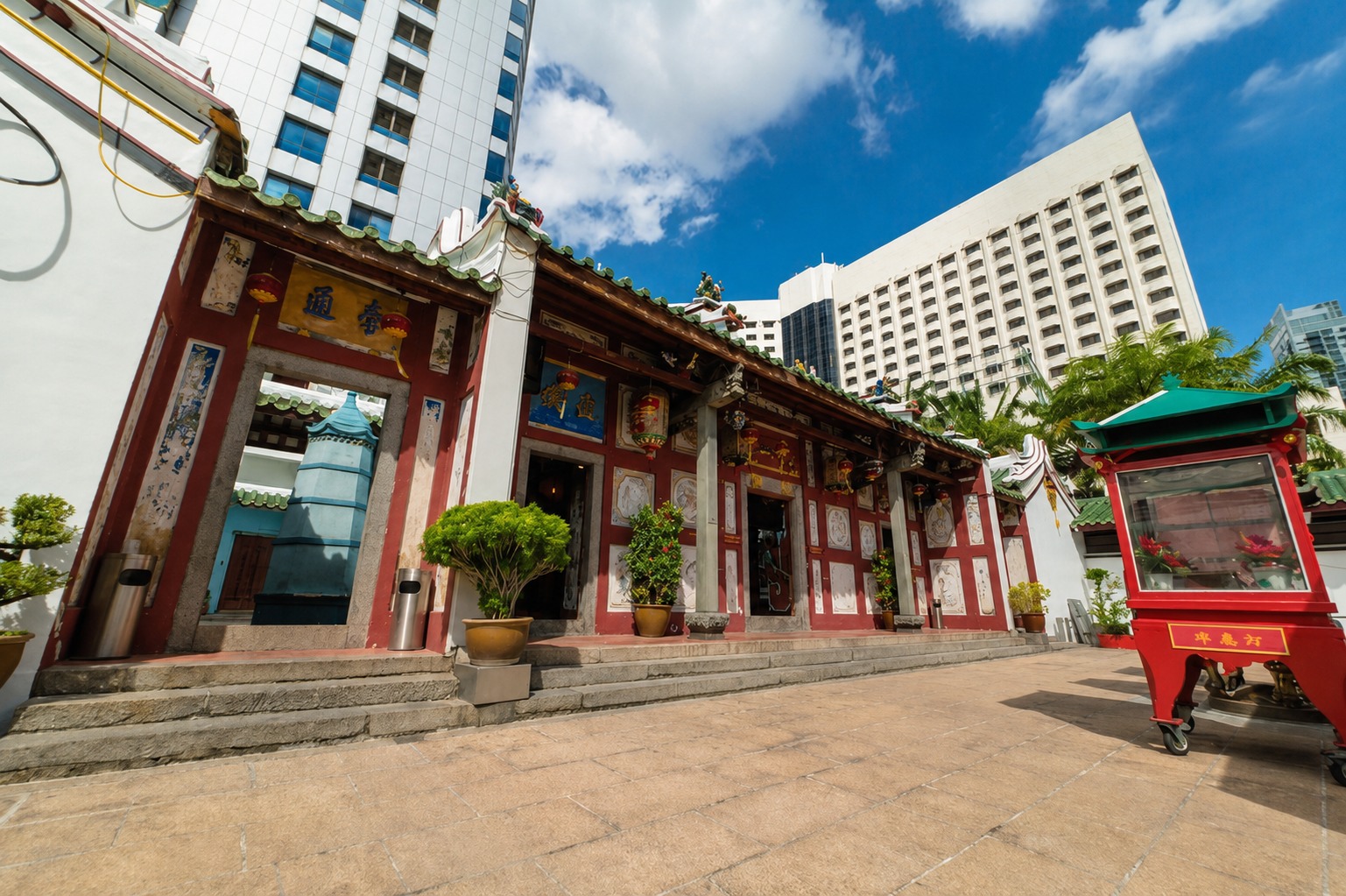
Johor Bahru Old Chinese Temple
Its history dates to the early 1870s and 1880s. The temple is one of the city’s oldest structures and represents unity among several long-established Chinese dialect communities in Johor Bahru.
The traditional red entrance, courtyard, shrines and historic religious details set among the modern buildings of Jalan Trus.
Capture the entrance from Jalan Trus while keeping the pathway clear.
Suggested visit and access note
Suggested time: 20–30 minutes.
Visitor note: Remain quiet, dress respectfully and ask before photographing worship or interior ceremonies.
Johor Bahru Old Chinese Temple
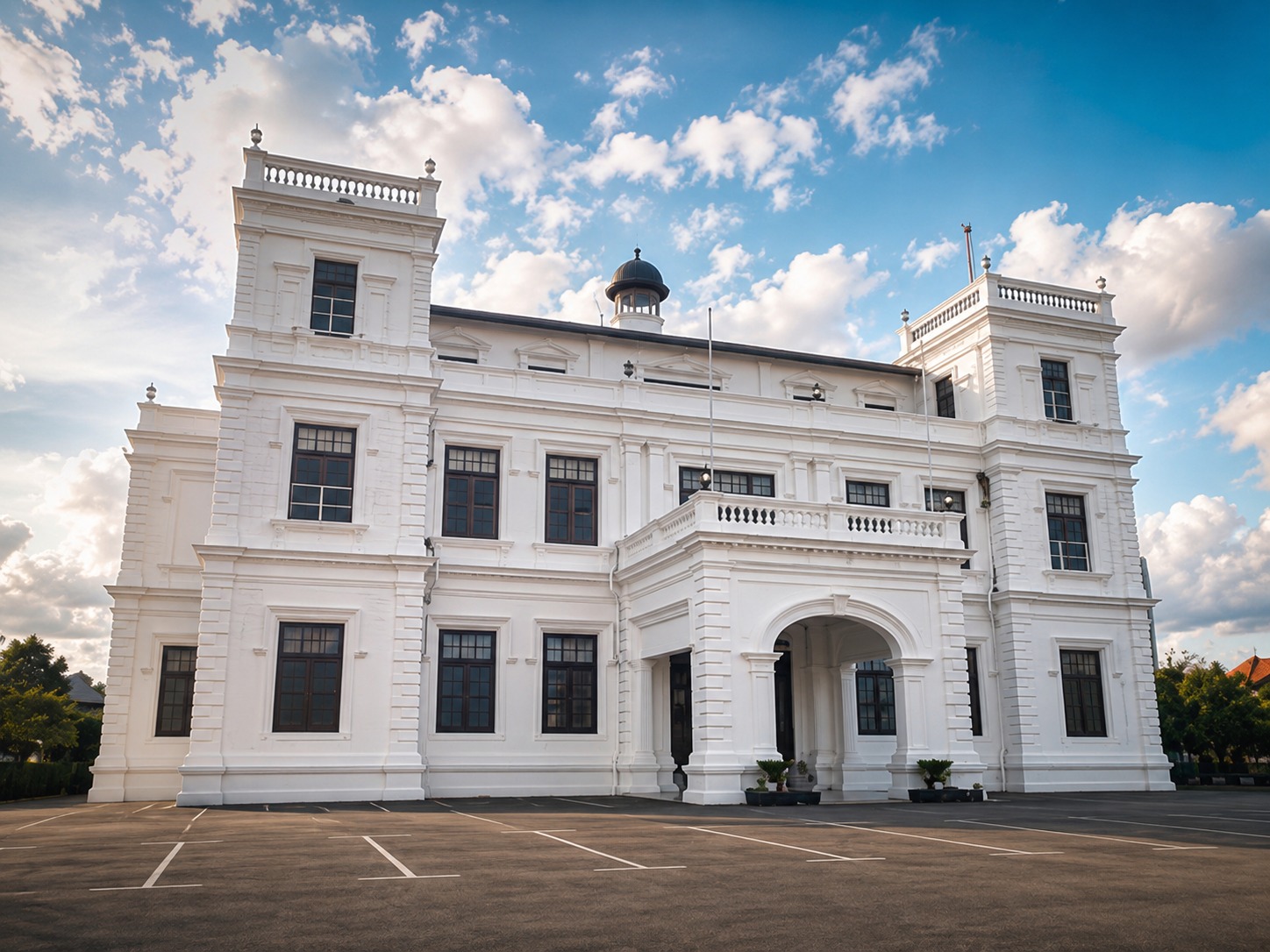
Dato’ Jaafar Building and Johor Figure Museum
Built from 1893 and completed in 1896, the building was the official residence of Johor’s first Menteri Besar, Dato’ Jaafar bin Mohammad. It later served educational, military and government functions before becoming a museum dedicated to notable Johor figures.
The English-house-inspired design, landscaped grounds and museum displays when public access is available.
Use the front elevation and surrounding greenery to show the scale of the residence.
Suggested visit and access note
Suggested time: 30–45 minutes when the museum is open.
Visitor note: Check current opening arrangements before travelling because museum access may change.
Dato’ Jaafar Building and Johor Figure Museum

Kota Jail Heritage Site
The former Ayer Molek Prison dates to 1883. It was reopened as a heritage and tourism site in 2025, with much of the original structure retained while new cultural, creative and visitor spaces were introduced.
The old perimeter walls, gates, prison gallery and adaptive-reuse spaces within the historic compound.
Photograph the preserved walls or entrance to show the contrast between the old structure and its new purpose.
Suggested visit and access note
Suggested time: 45–60 minutes.
Visitor note: Check the latest opening hours, gallery access and admission information before visiting.
Kota Jail Heritage
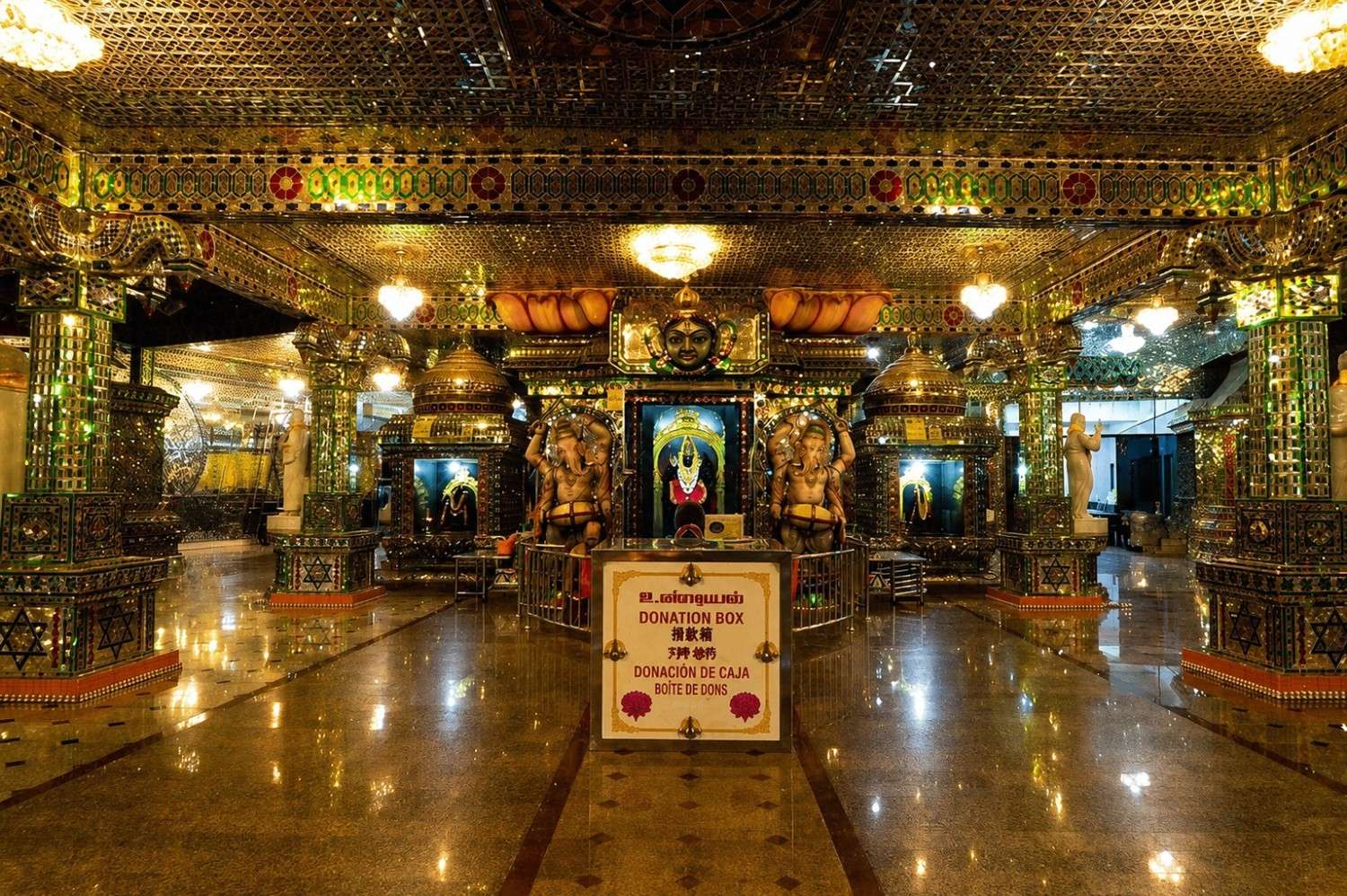
Arulmigu Sri Rajakaliamman Glass Temple
Established in 1922, this Hindu temple later became widely known for its glass-mirror interior. Tourism Johor notes that most of its walls, ceiling and pillars are covered with coloured glass sourced from several countries.
Reflective mosaics, devotional artwork, statues and the distinctive glass-covered interior.
Use an exterior image or photograph the interior only when permission is granted.
Suggested visit and access note
Suggested time: 30–45 minutes.
Visitor note: Dress modestly, remove footwear where required and avoid disrupting worshippers.
Arulmigu Sri Rajakaliamman Glass Temple
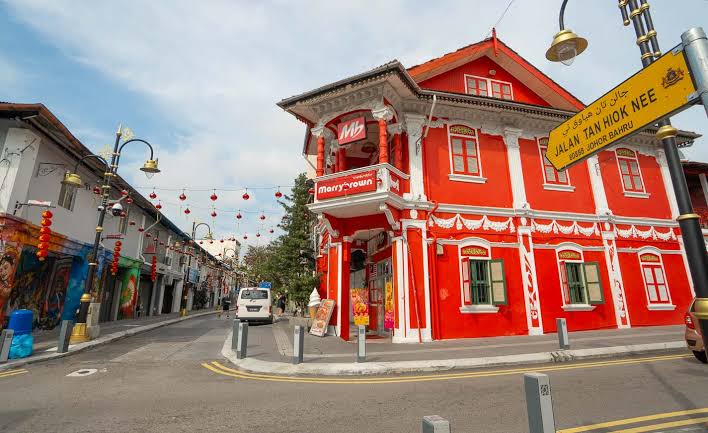
Jalan Tan Hiok Nee Heritage Area and Chinese Heritage Museum
This walkable city-centre area preserves Johor Bahru’s trading and community heritage through older shopfronts, cultural spaces, local businesses and the nearby Chinese Heritage Museum.
Heritage façades, narrow streets, cafés, traditional businesses, cultural details and museum exhibits.
Capture the street perspective early in the day, when the façades and pedestrian route are easier to see.
Suggested visit and access note
Suggested time: 45–90 minutes depending on museum and food stops.
Visitor note: Best explored on foot. Check the museum’s current opening hours before planning an interior visit.
Heritage china town JB
Suggested Half-Day Johor Bahru Heritage Route
Visiting all seven locations properly can take most of a day. For a compact four-hour introduction, focus on five central stops and treat the museum or temple interiors as optional depending on access and opening times.
Begin with an exterior architectural stop and waterfront view.
Continue to Bukit Timbalan for the landmark façade and tower.
Visit the historic temple on Jalan Trus and observe its traditional details.
Walk through the heritage street, museum area and traditional shopfronts.
Finish at the adapted heritage site and explore the available gallery or creative spaces.
Add the Dato’ Jaafar Building and Johor Figure Museum, followed by the Arulmigu Sri Rajakaliamman Glass Temple. Confirm current access before setting the final sequence.
Visitor Etiquette and Planning Tips
Religious sites
Dress modestly, keep voices low, follow footwear rules and avoid photographing worshippers without permission.
Government and heritage buildings
Do not assume internal access is available. Use public viewpoints and follow security or staff instructions.
Opening hours
Museum, gallery and temple schedules may change. Check current information on the day of travel before finalising an itinerary.
Transport and parking
Several city-centre stops are easier to combine with pre-arranged transport because parking and walking distances vary between locations.
Read the Car with Driver in Johor Bahru Guide.
Explore Valetra Car with Driver Services.
Frequently Asked Questions
What are the most famous historical places in Johor Bahru?
The Sultan Ibrahim Building, Sultan Abu Bakar State Mosque and Johor Bahru Old Chinese Temple are among the city’s best-known historical landmarks.
Can all seven places be visited in one day?
Yes, a full-day route may cover all seven when access and opening times are suitable. For a half-day visit, choose four or five central locations.
Can visitors enter the Sultan Ibrahim Building?
Public access may vary. Unless entry has been confirmed, plan it as an exterior photography and architectural stop.
Is there an entrance fee for the heritage attractions?
Some exterior stops are free, while museums, galleries or selected attractions may charge admission. Check the latest information before visiting.
Are the mosque and temples open to tourists?
Visitor access may be available outside worship periods, but guests should dress respectfully and follow the rules of each religious site.
Is Jalan Tan Hiok Nee suitable for walking?
Yes. It is one of the most walkable heritage areas in central Johor Bahru, with old shopfronts, cafés, cultural details and the nearby Chinese Heritage Museum.
Can Valetra arrange a private heritage route in Johor Bahru?
A private driver or selected city transport arrangement may be planned according to the confirmed route, duration, pickup point, passenger details and vehicle availability.
Explore Johor Bahru’s Heritage with a Private Driver
Plan a hotel pickup, half-day heritage route or flexible city journey based on your selected stops, passenger count and preferred duration.
View Johor Bahru Transport OptionsVALETRA shared and private transport for airport transfers, chauffeur service, city tours, corporate travel, family trips, group journeys and Malaysia–Singapore transfers.
Need help? Message us via LIVE Chat, email: [email protected], or call: +60 11-1116 6800.